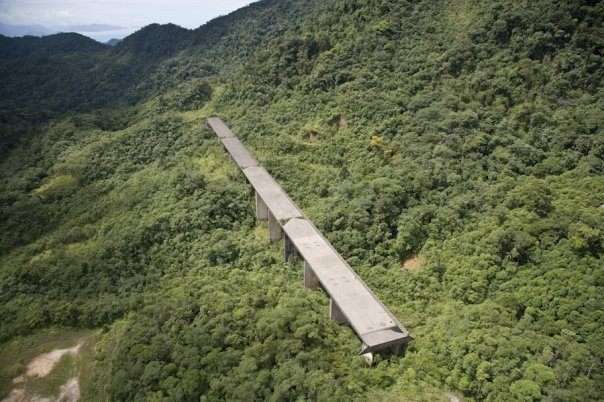
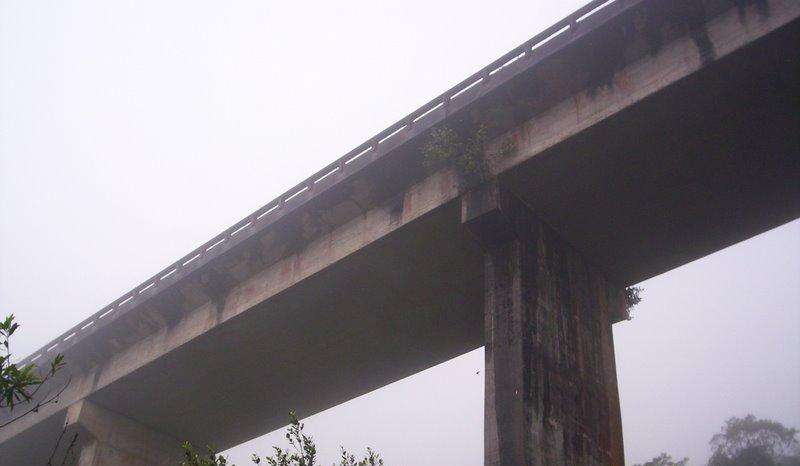
Viaduct Petrobras is an abandoned roadway in East Sao Paulo, Brazil. It rises dramatically out of the dense South American jungle. This impressive remnant concrete structure was originally part of the Rio-Santos Highway project. Measuring about 40 meters high and 300 meters long, Viaduct Petrobras has been left to be reclaimed by nature. Here, we look at this mystery, revisiting its history and what led to its abandonment.
History of Viaduct Petrobras
In the 1950s, the Brazilian government envisaged a bold project of building a trans-coastal highway that would link Rio de Janeiro with São Paulo. Upon its completion, it would have been the longest continuous highway in Brazil, running from north to south for almost 3,000 miles.
The idea was to have the roadway traverse through the thick South American jungle. However, this created obstacles during construction, which slowed down the progress of this part of the highway. The two-lane road of Rios-Santos was initiated in the 1960s.
In the 1970s, the project was revived as part of Brazil’s ambitious plans to become a nuclear powerhouse. Since building a road over the mountains was too impracticable, the new plan was to create a road right through the jungle became visible.
The road alignment would follow Petrobras’ already established route for servicing/remediation of various damaged pipelines. Alignment with this route would serve the gas company’s infrastructure quite well. However, the strategic objective was to facilitate access to provide servicing and support to Brazil’s global development vision. That’s how the Viaduct grew to be called after Petrobras.
Challenges Faced During the Construction of the Viaduct Petrobras
The work in this development had to be performed under the most hostile conditions with extreme heat, insects, and big trees. Work moved on regardless of all these issues; the Viaduct aligned so that more than 30 miles of highway coastline would not have to be consumed.
This impressive structure is 300 meters, 40 meters above the jungle floor. It has tunnels, retaining walls, and an enormous concrete base, making conditions dangerous for construction workers.
In the late 1970s, Brazil underwent one of its worst-ever economic crises. Many government enterprises, including Viaduct Petrobras, were troubled by financial problems. The eventual suspension and recommencement of works in mid-period construction would cost more than keeping funds in the project.
Why Was Viaduct Petrobras Abandoned?
The Brazilian economic situation in the late 1970s was fragile. The era was characterized by high inflation, financial instability, and economic contraction, which affected the most ambitious government projects, including Viaduct Petrobras.
Viaduct Petrobras’s building was rather complicated for several reasons. First, it was in a dense and remote South American jungle – one of the severest in most respects. Extreme heat, big trees, and high humidity all obstruct workers while they had to fulfill hard work.
Construction logistics involved moving materials and machines to such a remote location, which developed further problems. Because of this ambitious scale, added to these harsh conditions, progress was slower and more expensive than forecasted.
The Viaduct Petrobras was initially projected as part of a larger project to connect Rio de Janeiro with São Paulo using a trans-coastal highway. However, plans and priorities changed the project’s scope as it developed.
It became obsolete when the highway was rerouted to connect with a coastal road instead of extending through the jungle. Thus, the change in the proposed route left the Viaduct unfinished and without practical use.
What Happened to Viaduct Petrobras?
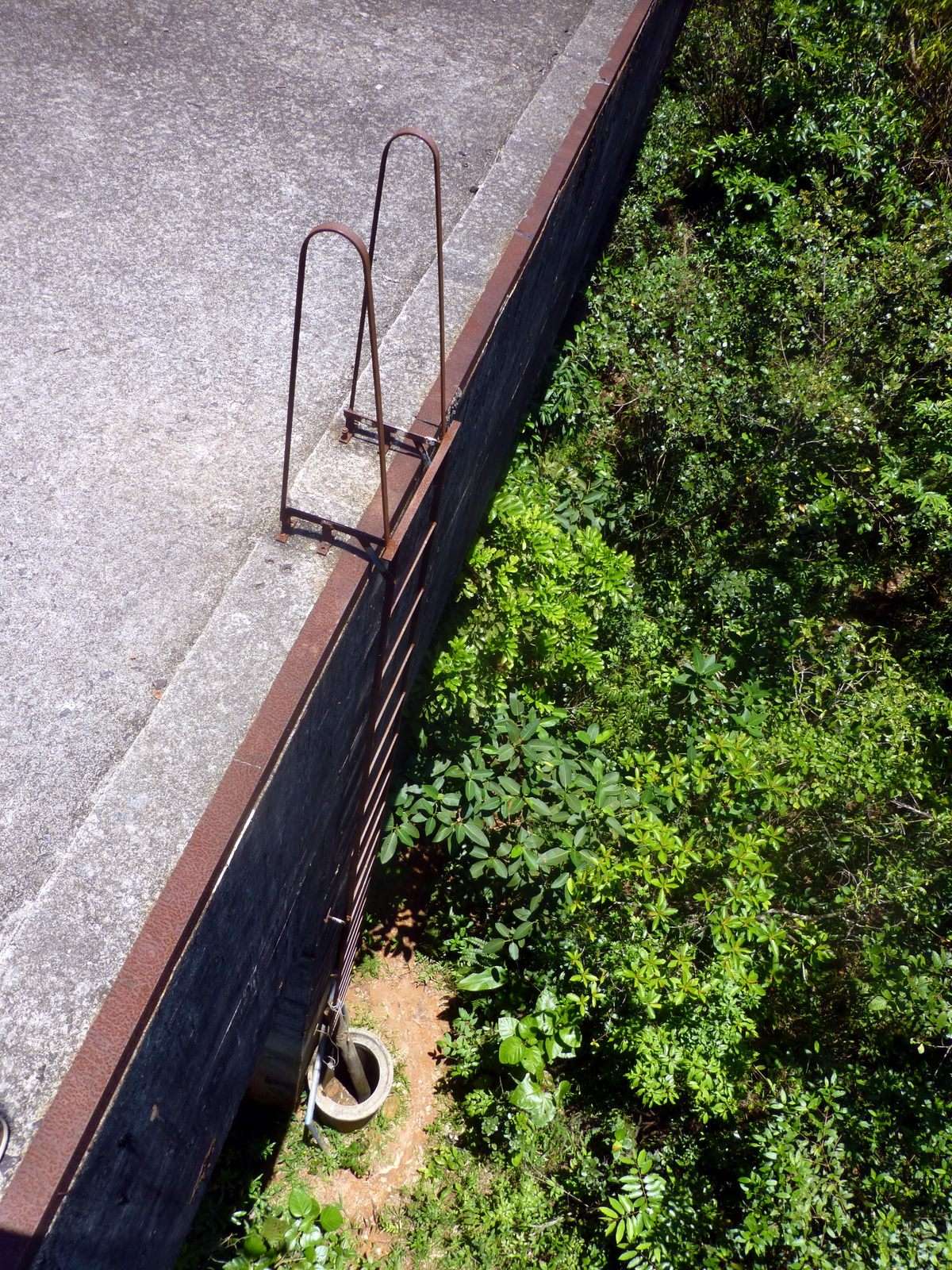
The ladder used to access the road.
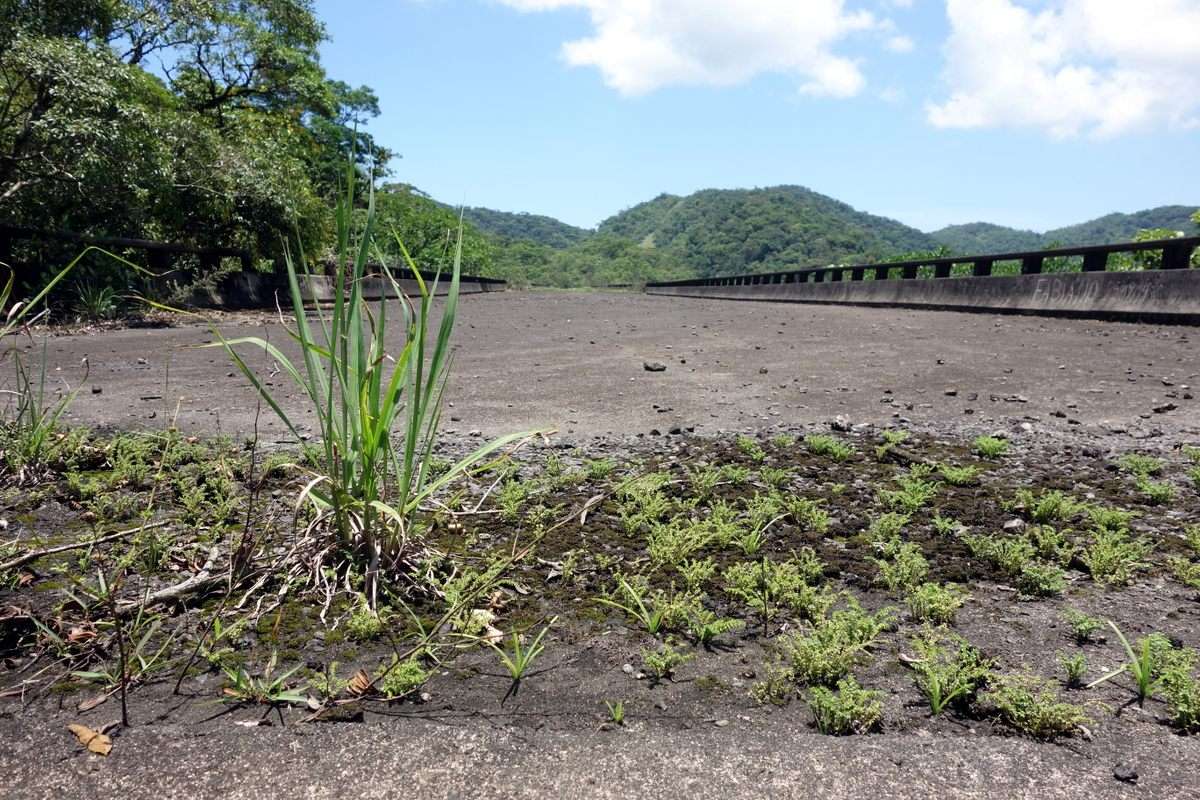
During these intervening years, the dense South American jungle stockpiled itself into the Viaduct. The vegetation slowly swept away what had been a proud engineering marvel. Trees and vines began climbing and clinging to the concrete outside the viaduct structure, thereby dramatically changing it.
The more word spread about the Viaduct, the more it gained interest among thrill-seekers and explorers. Its dramatic and picturesque surroundings made it very famous to all those who wanted to learn about a piece of history, together with the challenge of going through the jungle to arrive there.
Soon, it became a niche tourist destination-precisely for those who looked for adventure tourism. Given its height and impressionist landscape, it would be an ideal spot to rappel or even perform a bungee jump. Thus, agencies that provide services for this kind of tourism organized such activities, taking full advantage of the thrilling and panoramic views this Viaduct could offer.
Access routes were developed to receive visitors from the Salesopolis—Caragua neighborhood in Porto Novo. However, the last stretch of the approach is done on precarious path conditions, and visitors usually walk or use motorbikes on narrow country roads.
The Viaduct has taken an unusual yet dramatic form, one of the subjects to be covered by photography and the media. Its juxtaposition-man-made structure against the lush natural backdrop locks in the imagination of many, building appeal as an abandoned site.
Can You Visit Viaduct Petrobras?
Well, yes, you can see the Viaduct Petrobras, but there are a few things to consider. The Viaduct is so far south from São Paulo state in Brazil. It is in the jungle, which means going through thick vegetation and rough terrain until you reach it.
It can be reached from the Caragua Salesopolis neighborhood in Porto Novo, but the last half-approach is on a narrow country road. Generally speaking, visitors hike or use their motorcycles to get to the Viaduct for the last stretch.
The Petrobras viaduct has gained notoriety in adventure tourism. It is connected with rappelling and bungee jumping. Adventure tourism agencies organize guided tours and activities of the Viaduct.
Travelers are warned that this remote and abandoned construction requires a cautious visit. The building may be unstable or rotting, and the surrounding jungle is challenging to walk in.
Planning can make a visit very workable. Transportation arrangements to the neighborhood of Salesopolis Caragua and a permit or tour booking in advance may help you have a hassle-free visit. Adventure activities such as rappelling or bunk jumping are always better with appropriate safety gear and following the guides’ instructions.